
RadIQ: From Radiology Reports to Quality Management and Clinical Collaboration
Voice-generated reports, multimodal quality checks, and diagnostic risk alerts. Deployed and in use at three hospitals, with positive results.
Iterating Healthcare AI Medical Imaging Report Quality Model Engineering
One report connects more than radiology
Radiology is the starting point. Quality management, clinical collaboration, and patient care complete the picture.
- Radiologists: less repetitive writing; earlier identification of missing information.
- Department heads: clearer quality issues and improvement priorities.
- Quality and medical affairs teams: track findings, reviews, and corrective action.
- Treating clinicians: clear reports and timely handoffs of important risks.
- Patients: less waiting, timely attention to significant findings, and clearer next steps.
- Hospital IT: straightforward integration, controlled data access, and manageable models.
Highlights: multimodal AI, deployed at three hospitals
The multimodal AI reporting tool is deployed and in use at three hospitals, with positive results.
Core capabilities include:
- AI voice-to-report generation: turn dictated findings into structured drafts.
- Multimodal report quality checks: flag omissions, inconsistencies, and items requiring review.
- AI diagnostic risk assessment: highlight risks for physician review.
- Quality management and clinical collaboration: trace quality findings, notifications, and actions.
The workflow: less repetition, traceable review
- Reporting: voice, text, and images → a draft report.
- Quality: daily report synchronization → full review → human confirmation.
- Collaboration: risk alert → clinical notification → recorded acknowledgment.
- Responsibility: AI drafts and flags; physicians decide and sign.
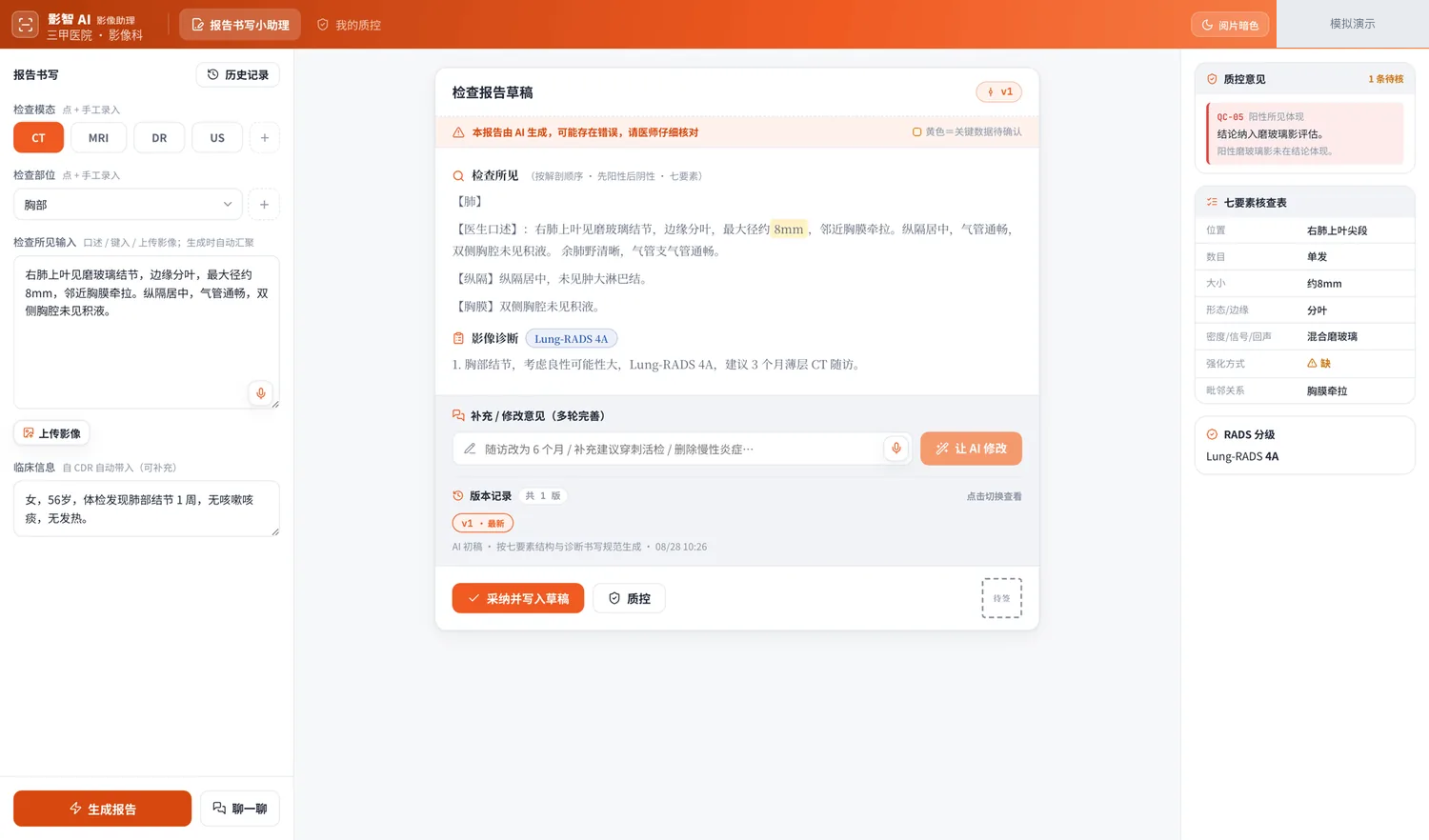
Reporting: from dictation to signature
- Flexible input: combine dictation, typing, and uploaded images.
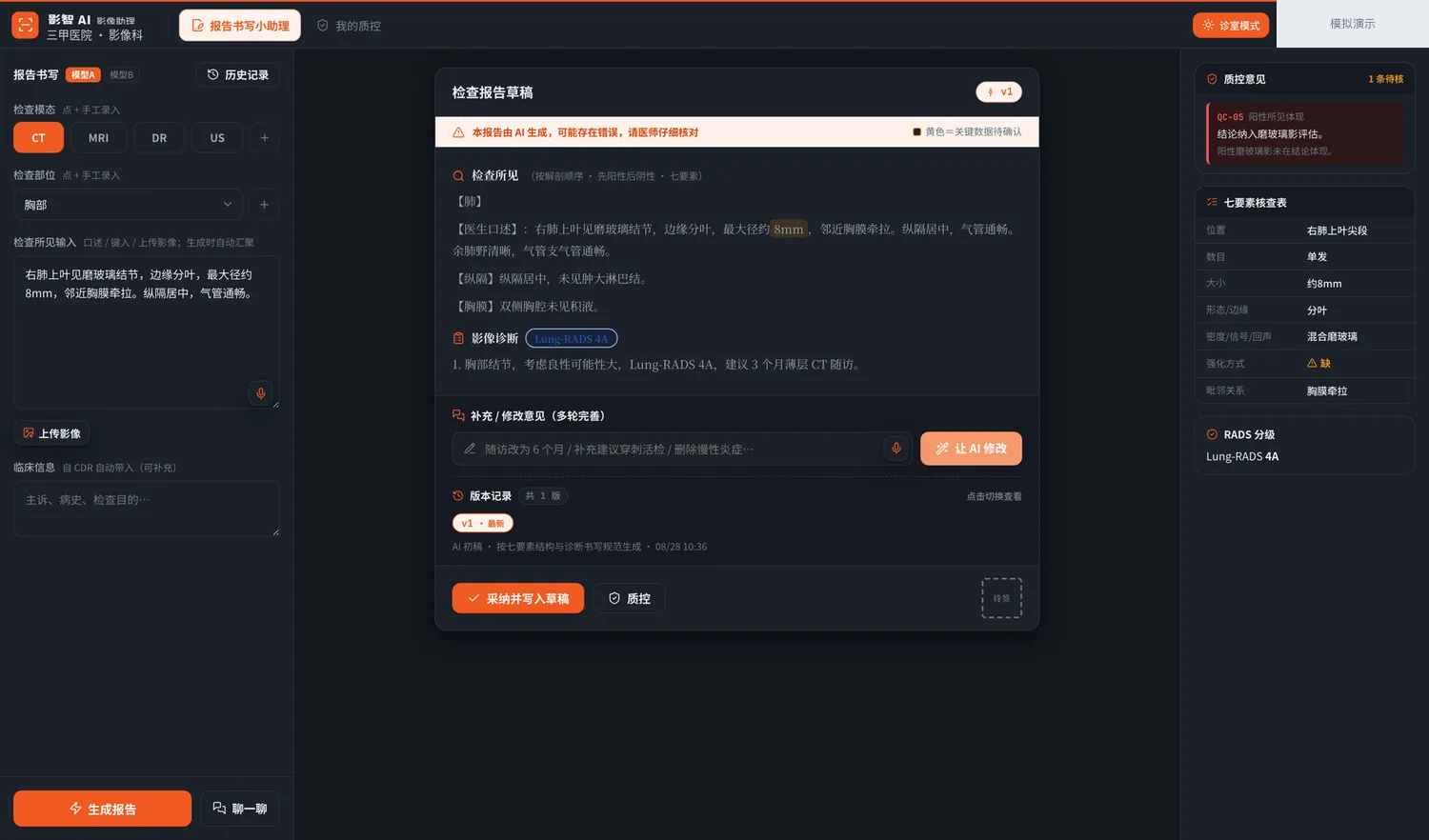
- Structured drafts: organize findings by anatomy; flag missing elements and RADS classifications.
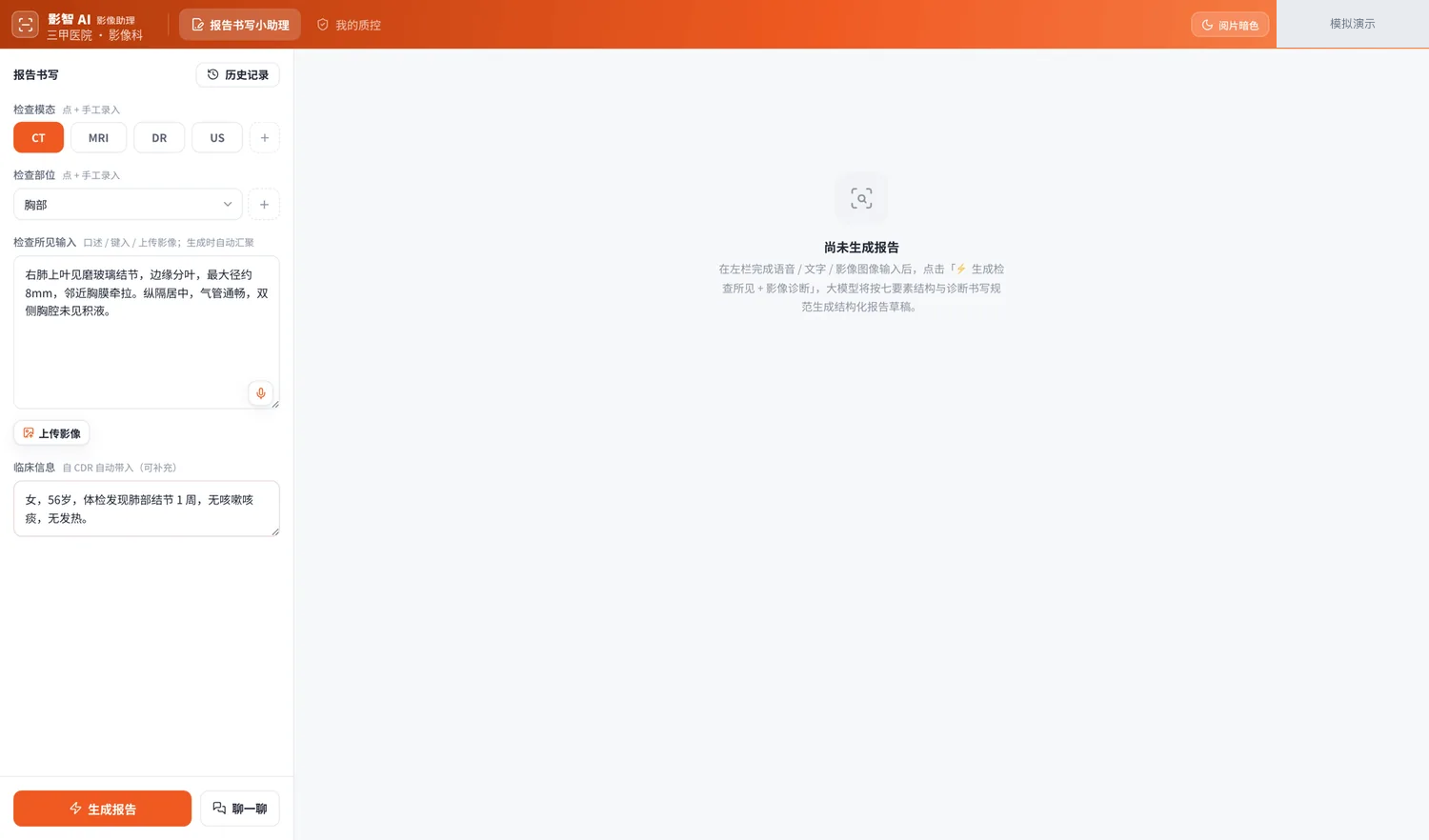
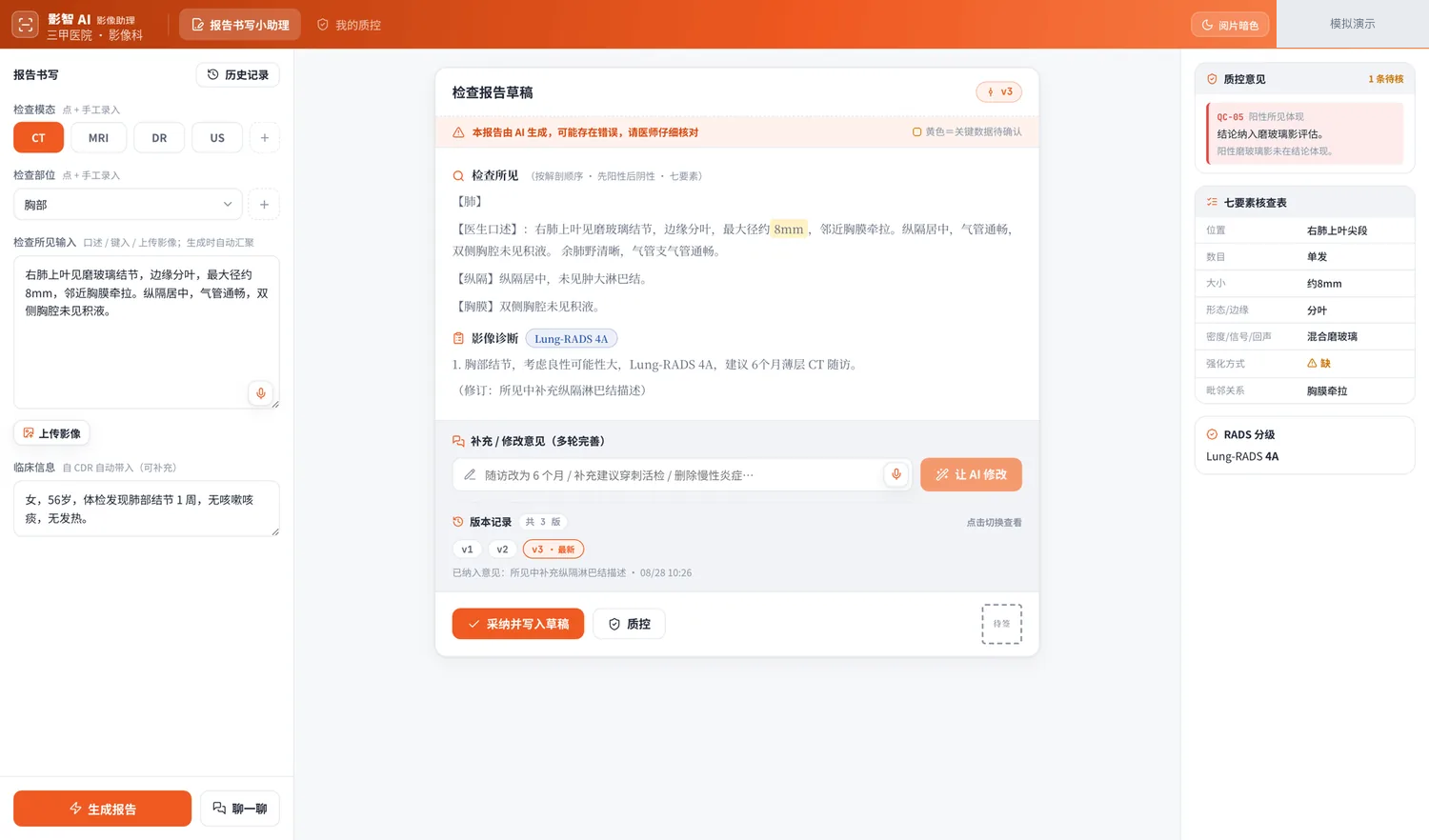
- Iterative editing: request changes in plain language; save, compare, and restore versions.
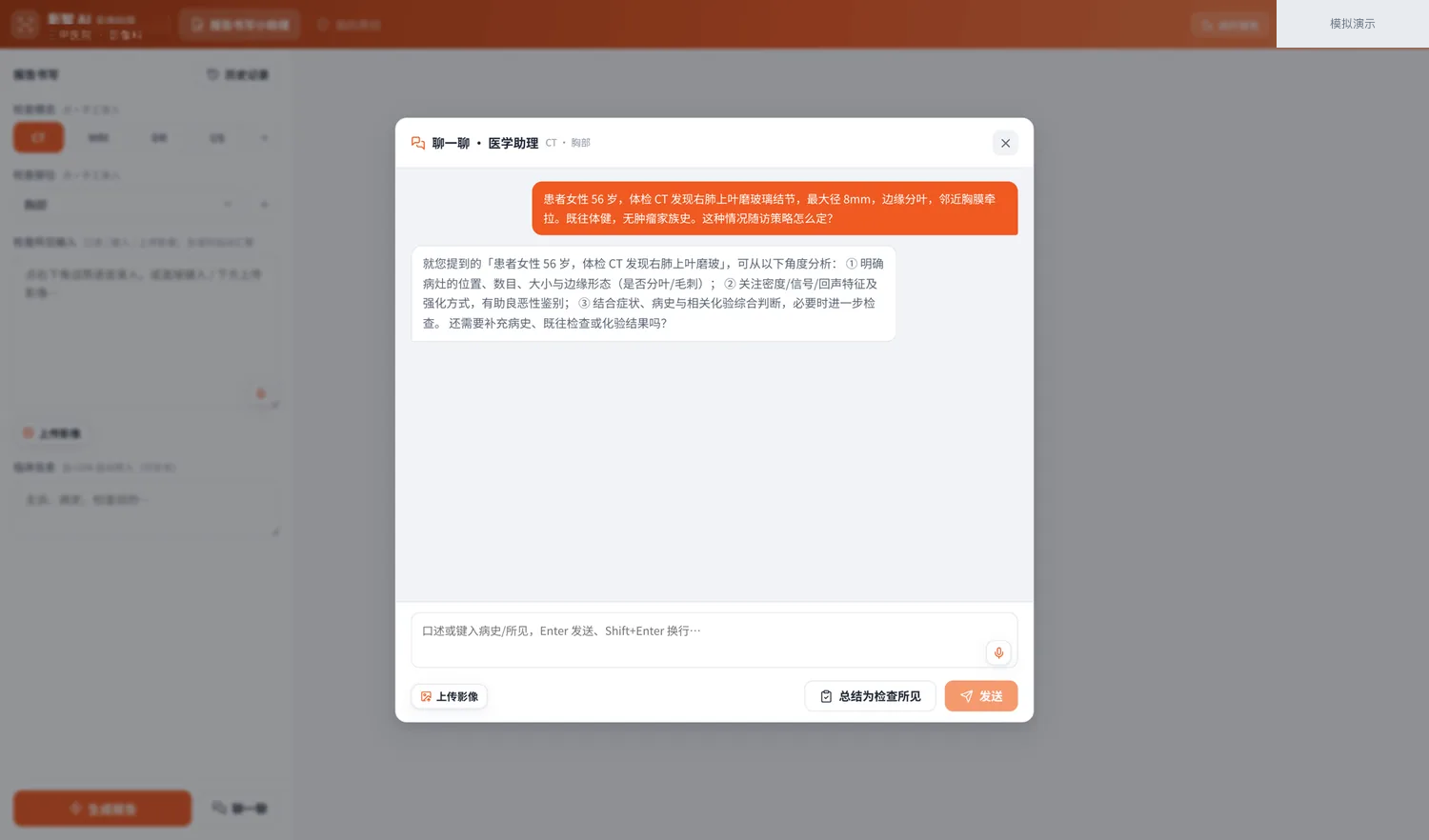
- Discuss before drafting: summarize a case discussion into findings with one action.
- Accepting is not signing: send the draft to the hospital system for physician review and signature.
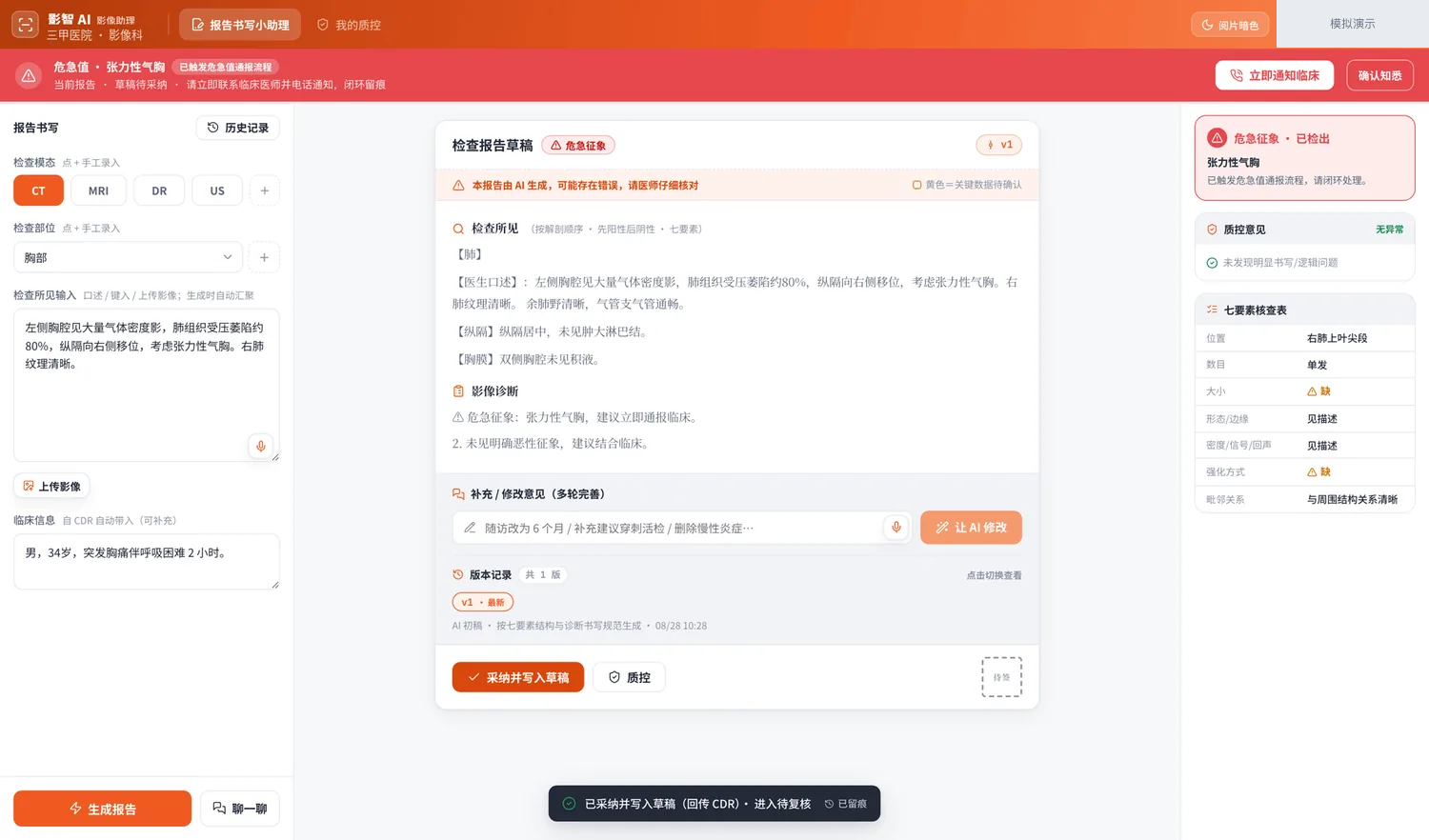
- Reading-room support: switch between light and dark modes.
Quality management: beyond spot checks
- Full review: check all reports included in the daily sync; actual coverage depends on synchronization and task execution.
- Visible reasoning: show matched rules, deduction reasons, and suggested changes.
- Human review: AI flags issues; physicians confirm scoring decisions.
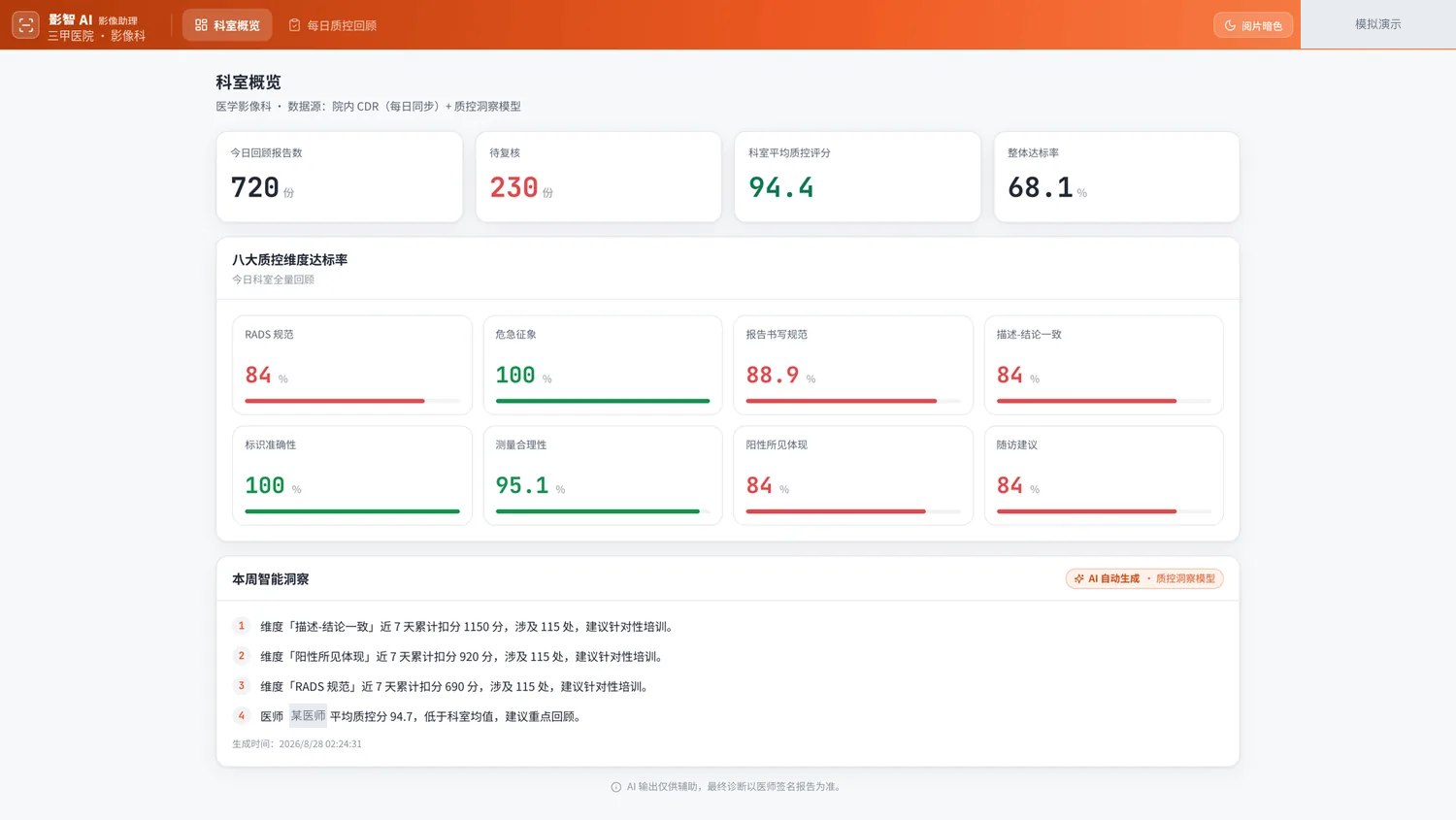
- Continuous improvement: aggregate recurring issues to inform departmental and hospital quality management.
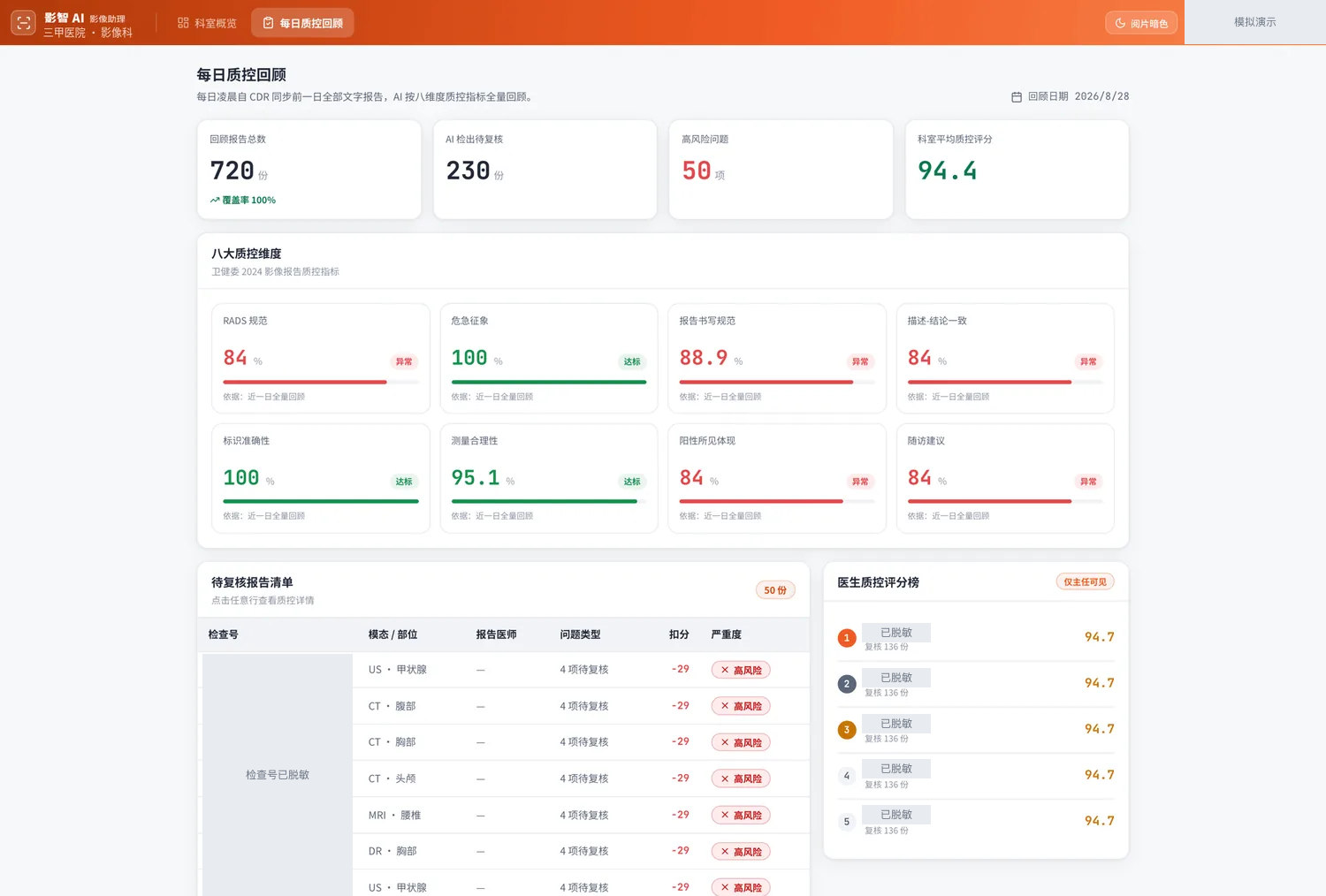
Eight quality dimensions:
- Report structure and identifier accuracy.
- Findings–conclusion consistency and inclusion of positive findings.
- Critical findings and RADS compliance.
- Measurement plausibility and follow-up recommendations.
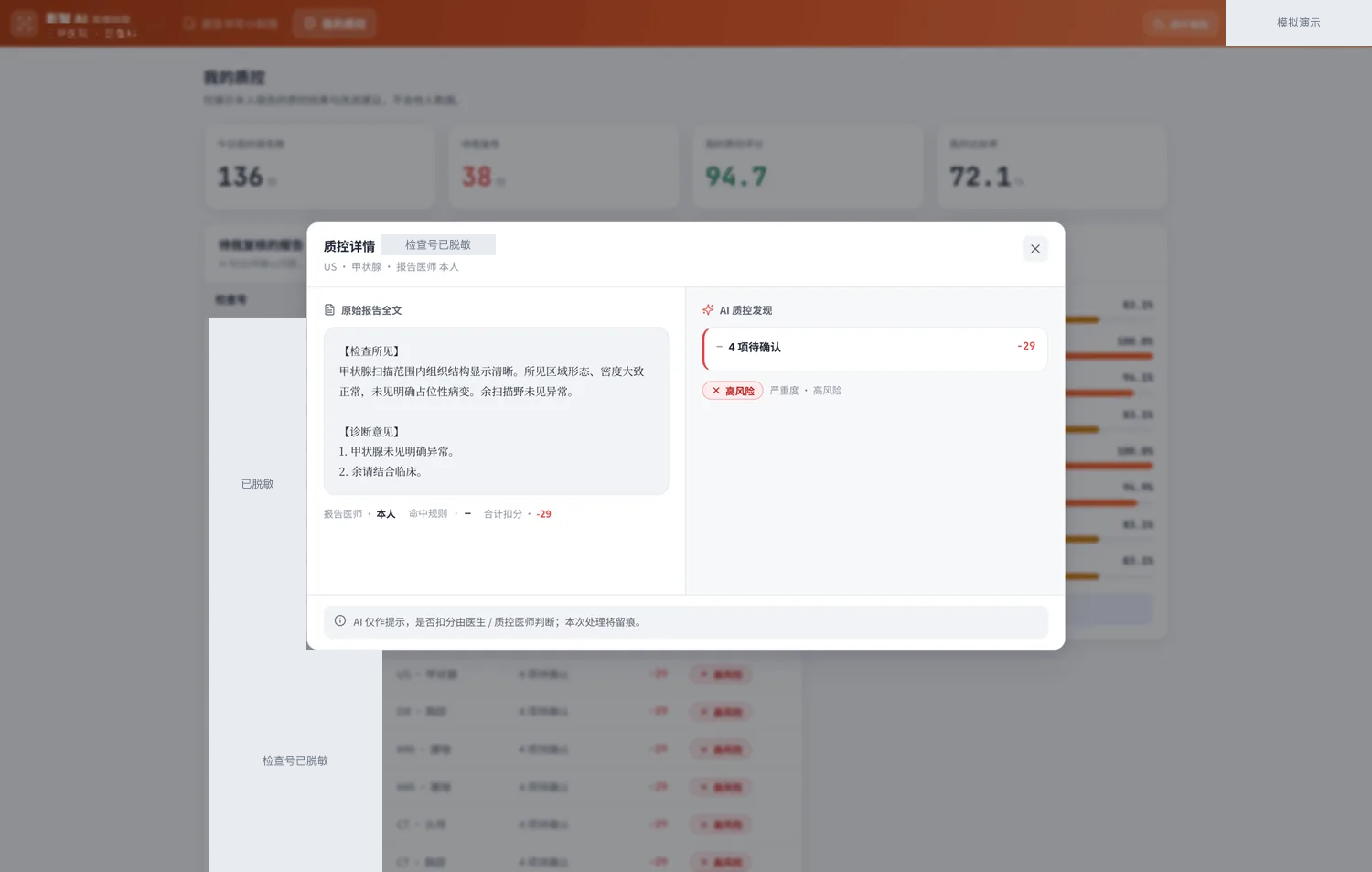
- Configurable rules: adjust scoring, activation, and evaluation methods; retain change records.
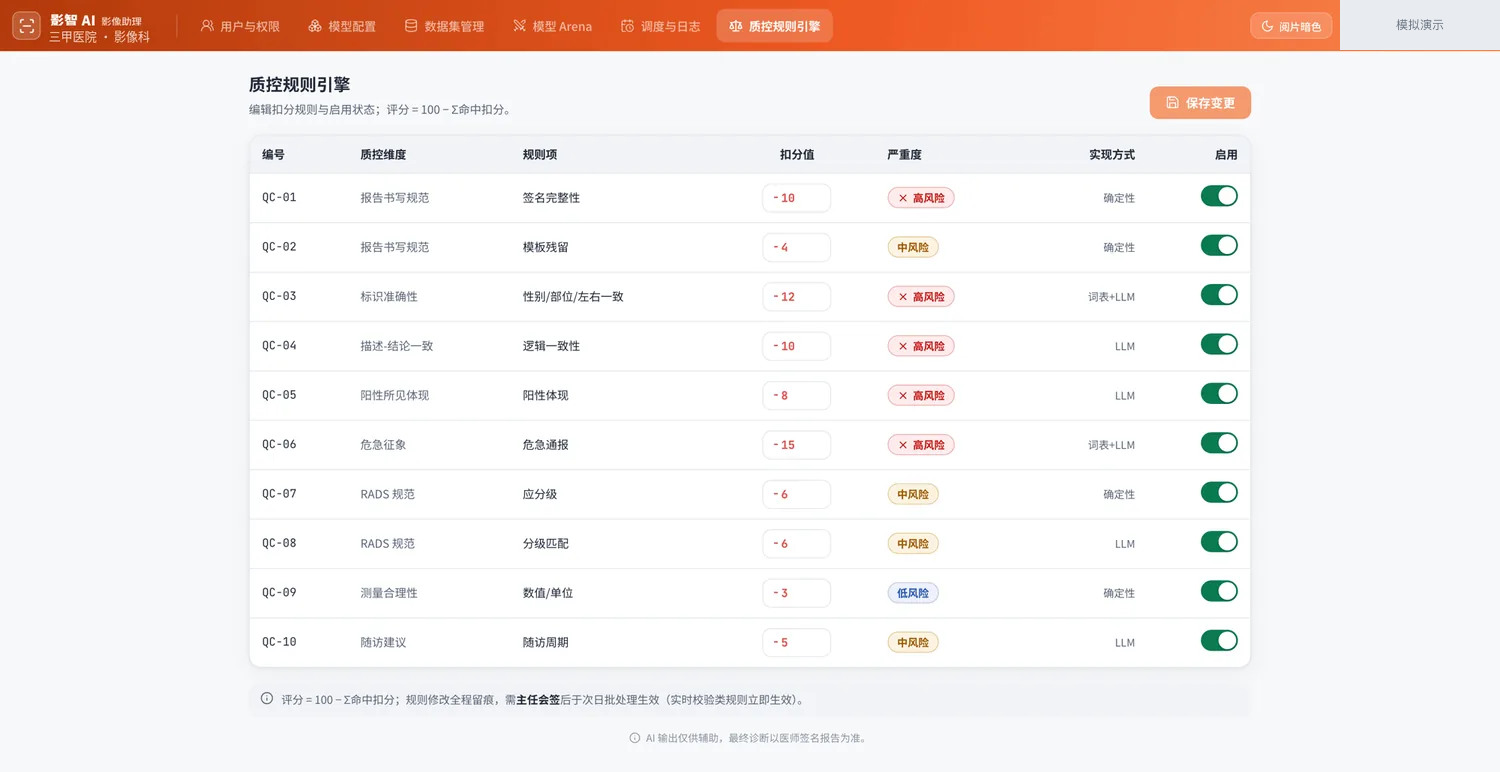
- Trackable insights: review dimension-level performance and improvement suggestions.
Clinical collaboration: alerts need follow-through
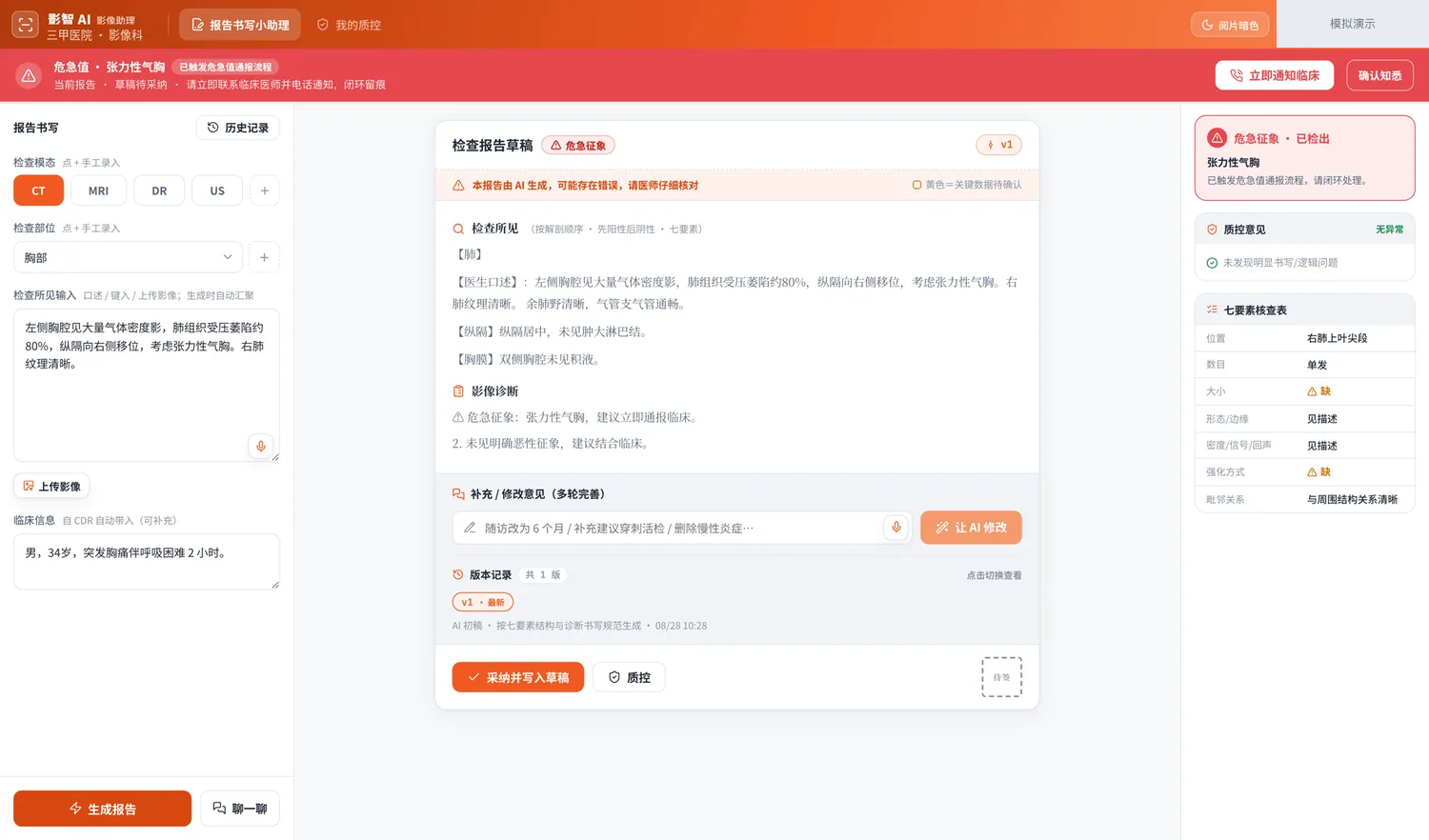
- Prominent critical-finding banners do not dismiss themselves.
- Connect clinical notification, acknowledgment, and action records.
- System records do not replace phone calls or hospital response procedures.
Access and responsibility
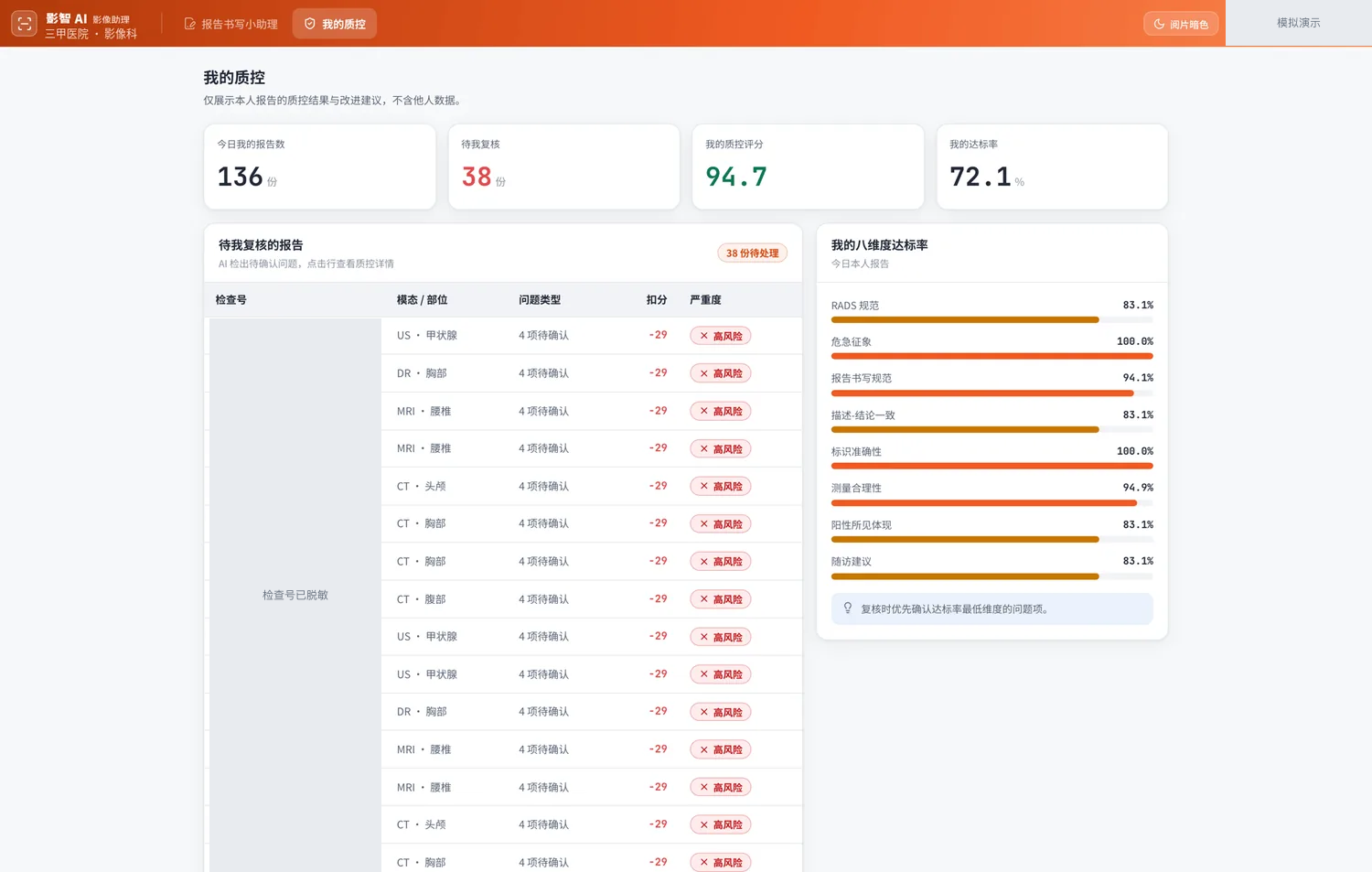
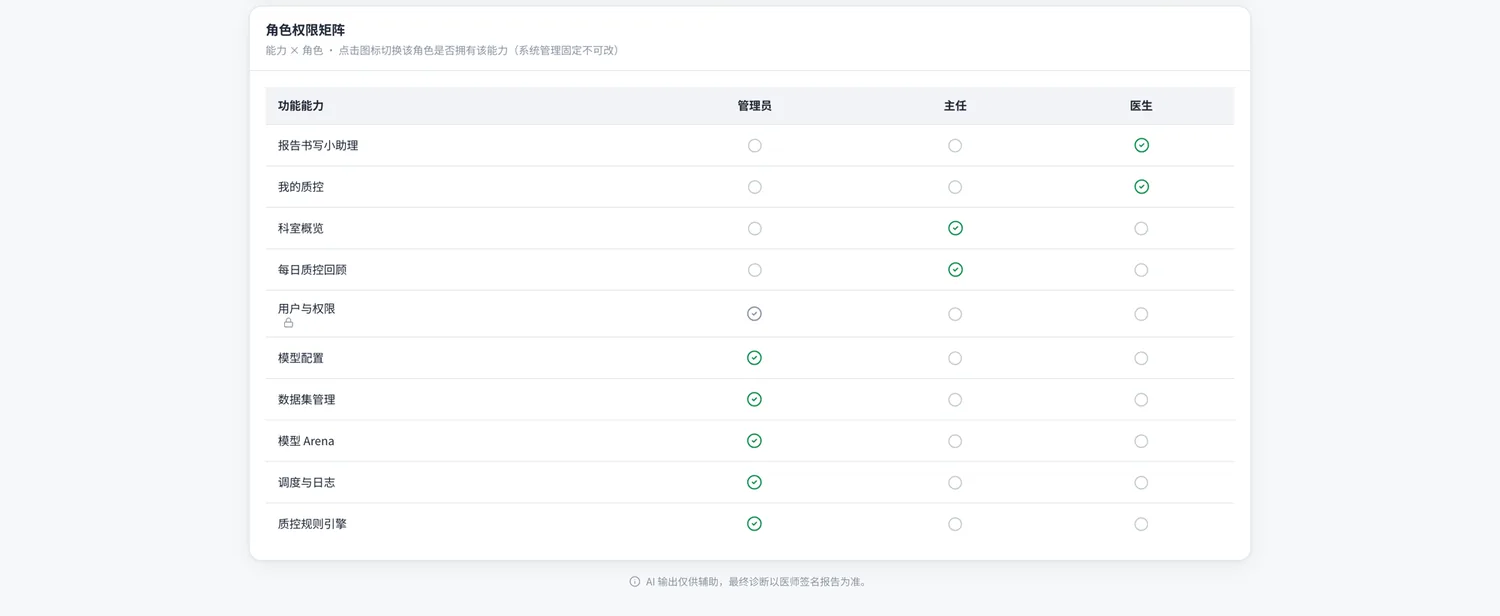
- Physicians: write reports and see their own quality results.
- Department heads: see department summaries and quality distribution.
- Administrators: manage accounts, permissions, and models—not clinical report details.
- Quality, medical affairs, and collaborating teams: access depends on hospital authorization and system integration.
Hospital IT: manageable models, reusable capabilities
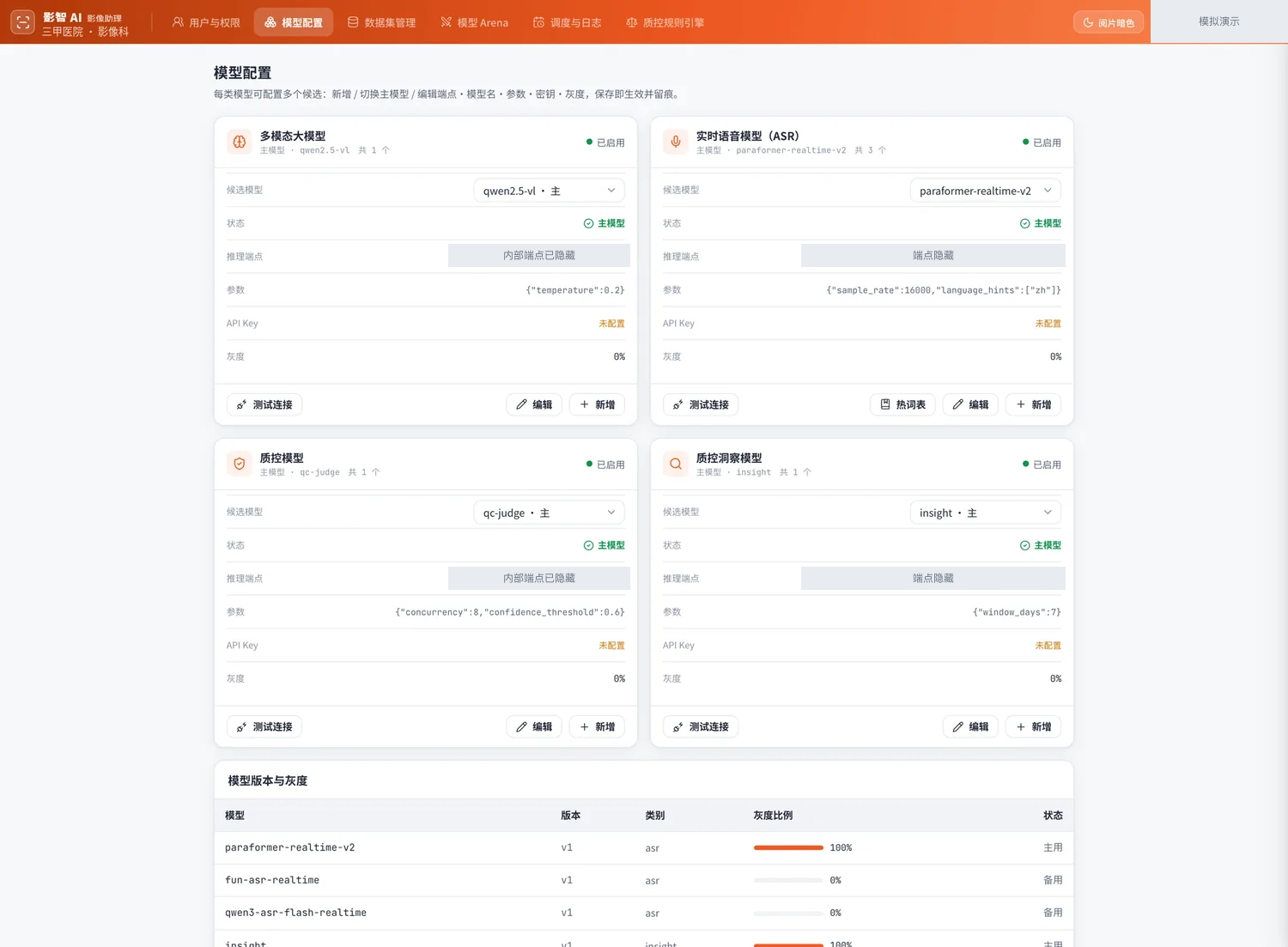
- Replaceable models: configure report generation, speech recognition, quality checks, and insights separately.
- Controlled upgrades: candidate switching, staged rollout, and connectivity tests.
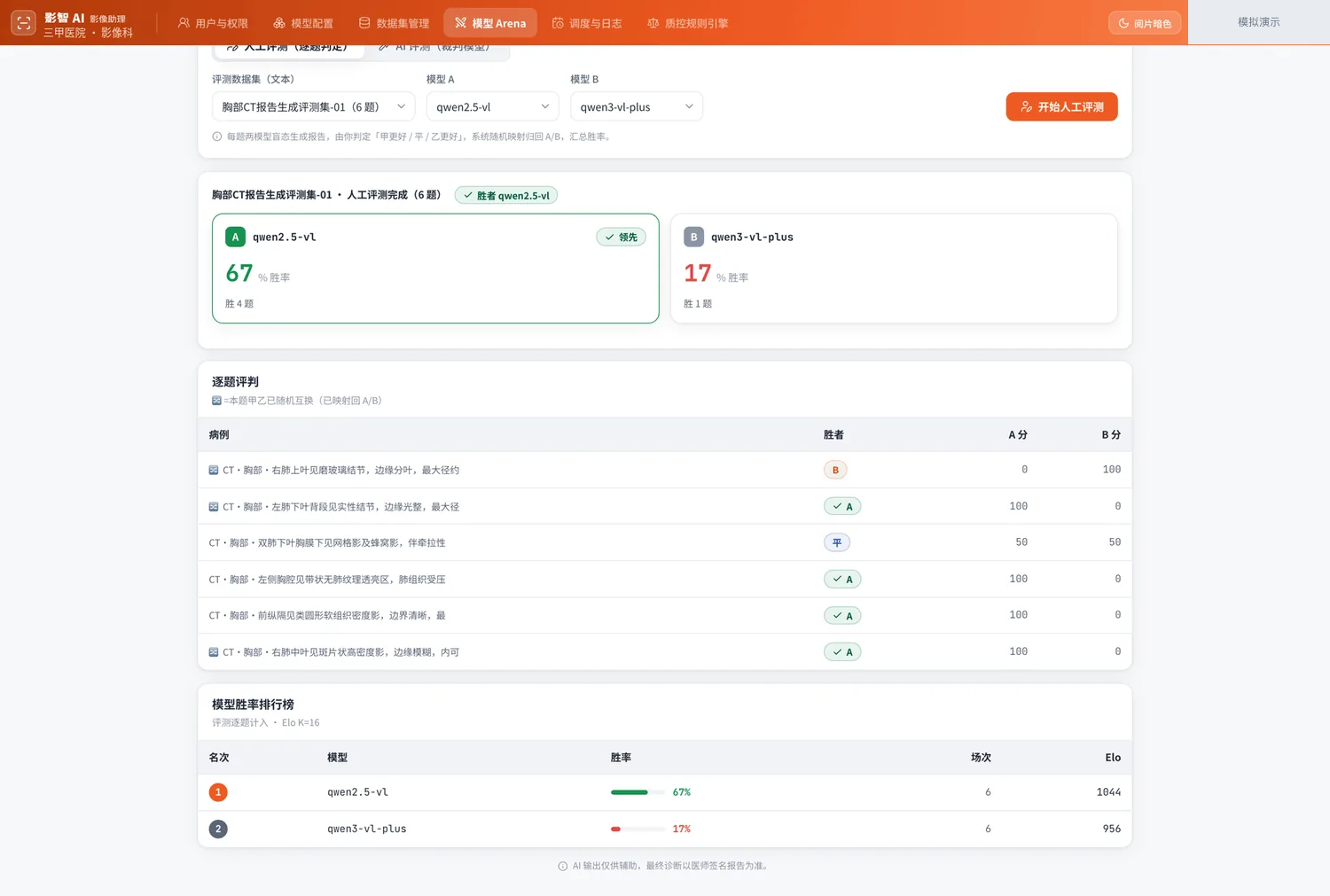
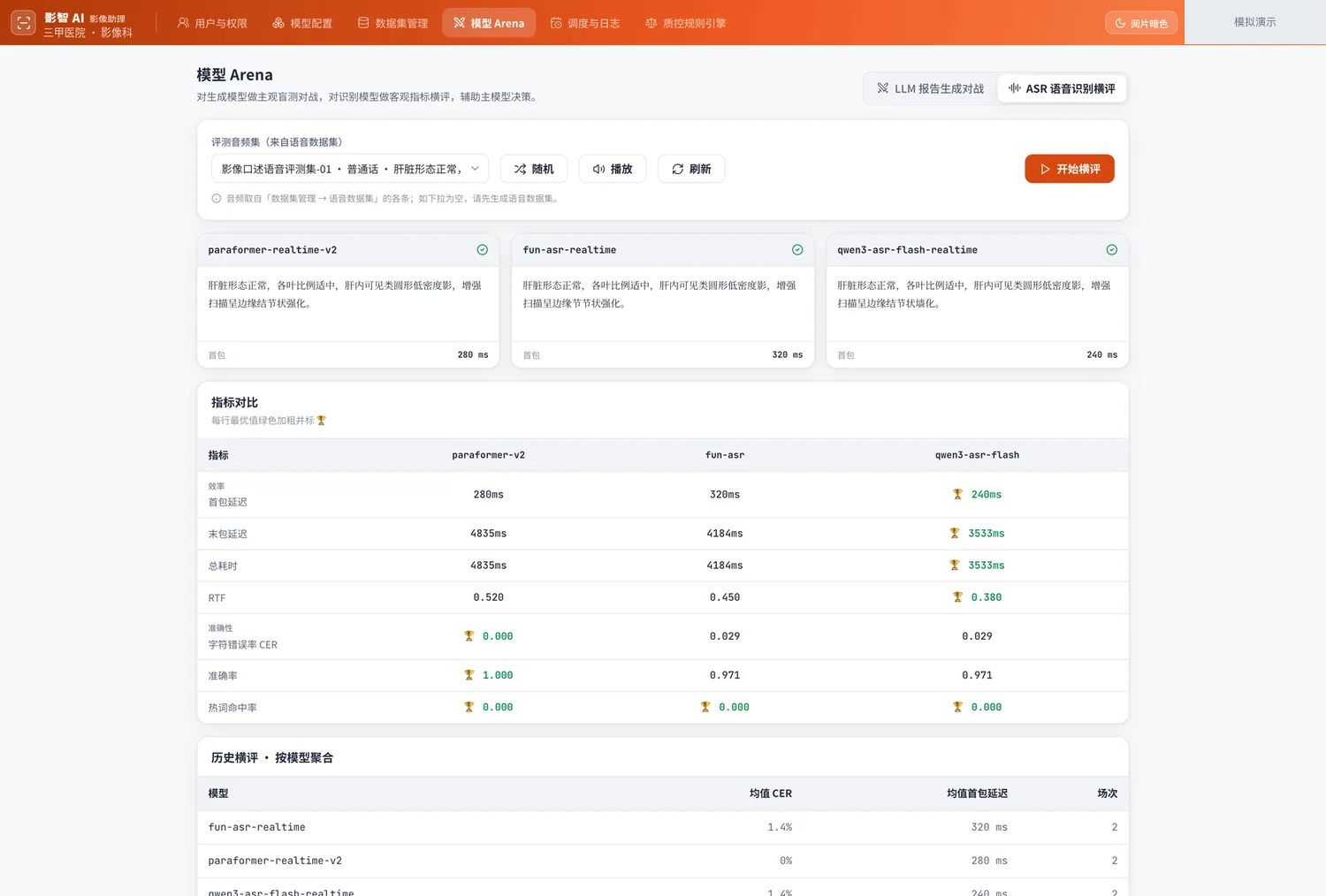
- Evaluate before choosing: blind comparisons for report models; side-by-side speech benchmarks.
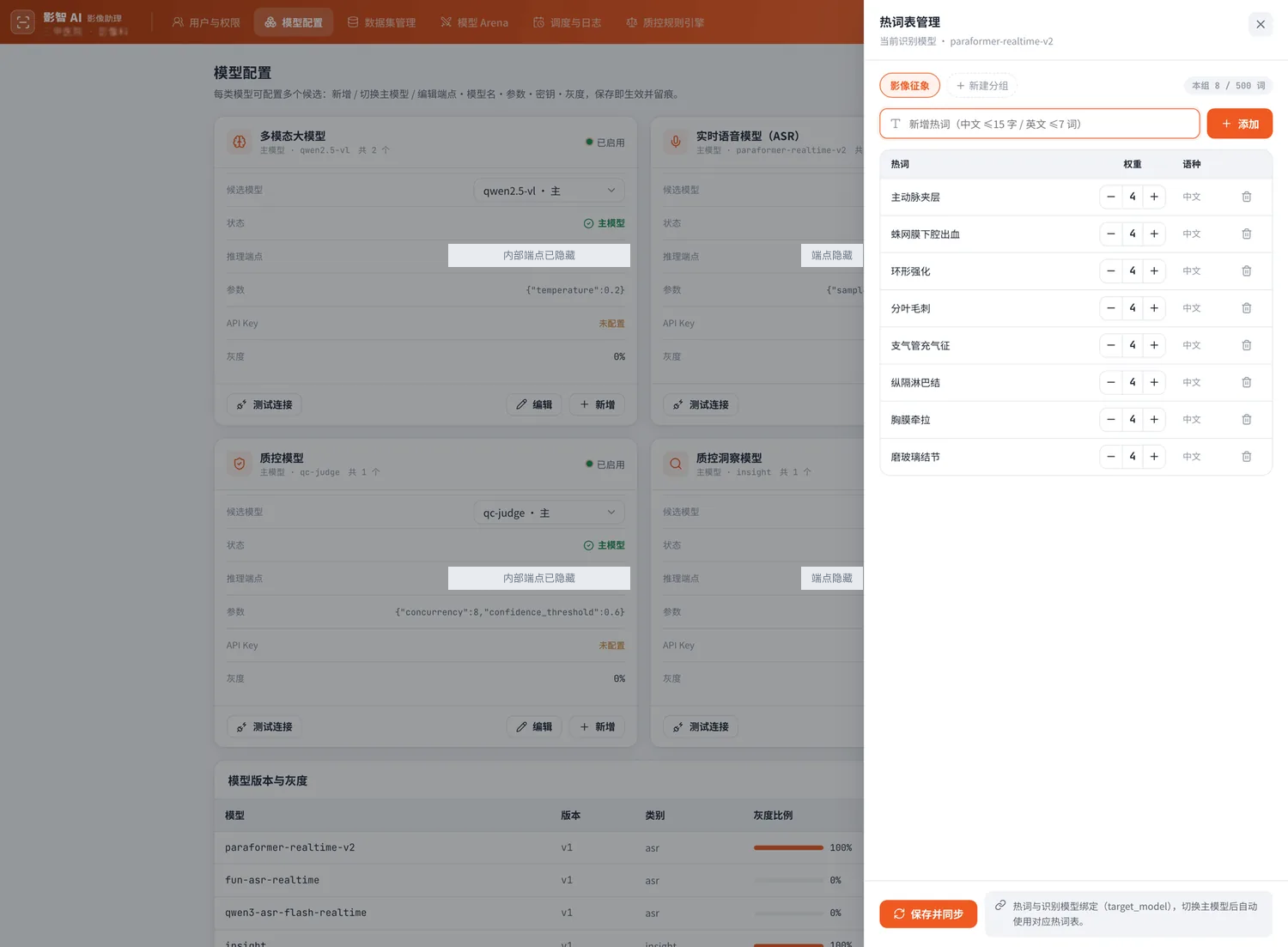
- Maintainable terminology: manage domain vocabulary and weights by group.
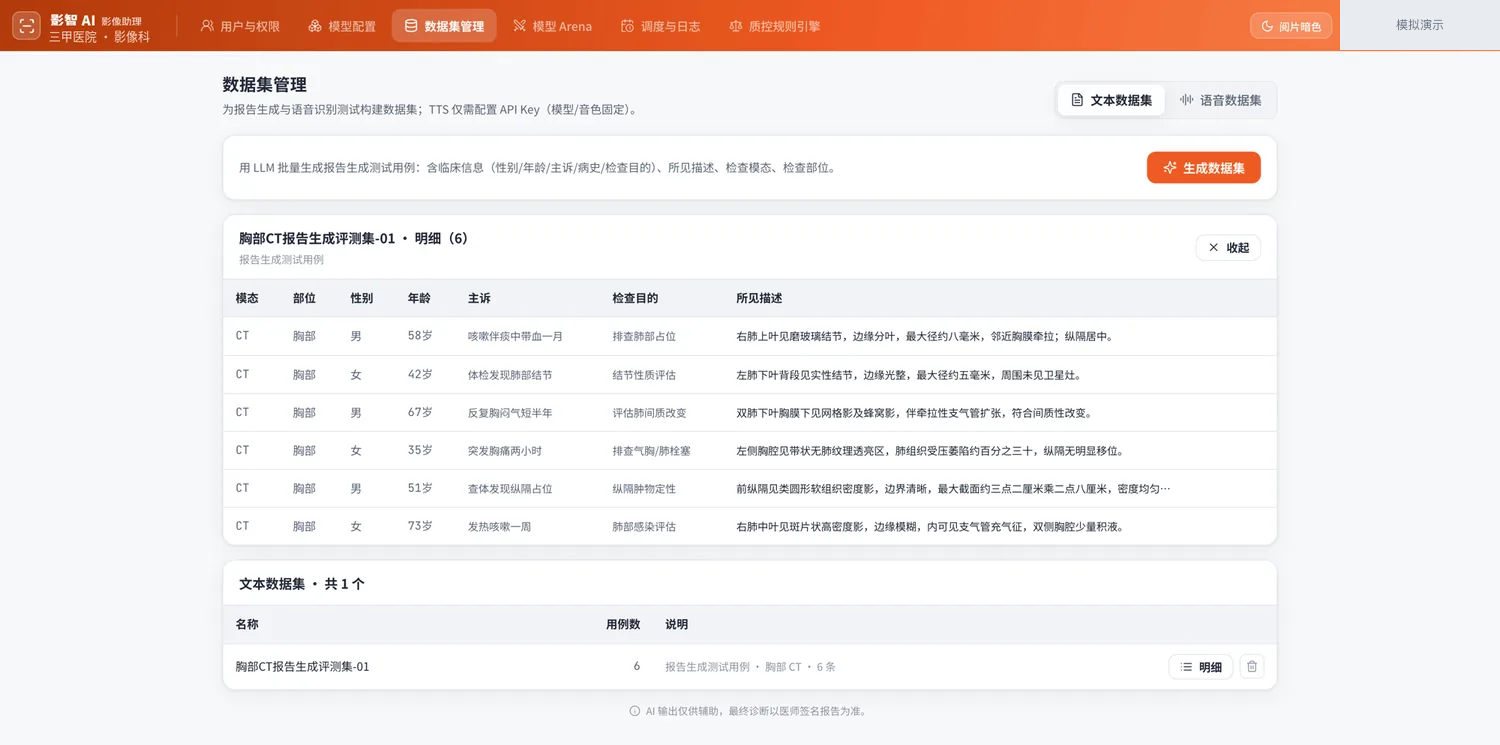
- Reusable evaluations: use the same cases for human and model-based assessment.
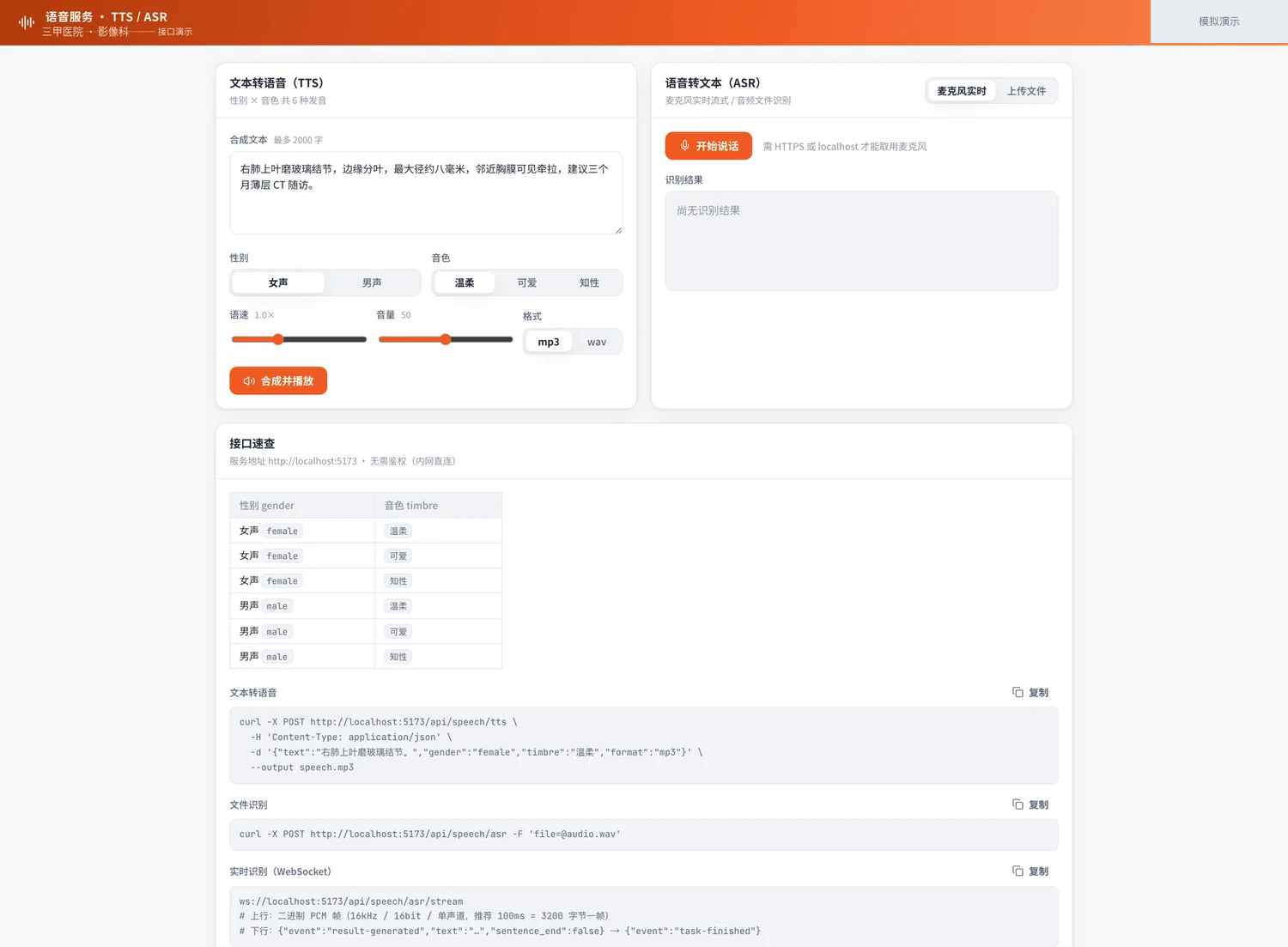
- Reusable speech services: expose text-to-speech, audio recognition, and real-time transcription to other hospital systems.
Deployment and boundaries
- On-premises: keeping data in the hospital requires local models and appropriate network controls.
- Physician responsibility: AI provides drafts and risk prompts, not final diagnoses.
- Authorized access: a management need does not imply cross-department access is enabled.
- Patient value: waiting times and care coordination are goals to evaluate—not proven outcomes or an existing patient portal.
- Demonstration data: screenshots are redacted; sample statistics are not hospital operating results. The product UI shown is in Chinese.
- Intellectual property: independently developed; V1.0 software copyright registration held by 北大医疗管理有限责任公司 (Peking University Healthcare Management Co., Ltd.).
Start with one report. Connect quality management and clinical collaboration. Keep patient care as the goal.